Ring Type Joint Flanges
Metal to metal sealing for high pressure service. ASME and API groove patterns, R, RX and BX rings, and the finish that makes them work.
A ring type joint flange seals with metal, not with a compressed sheet. A precision groove is machined into the face, a solid metal ring sits in it, and as the bolts are tightened the ring is wedged into the groove walls until it yields locally. The result is a seal that holds at pressures and temperatures where a soft gasket would extrude, creep or blow out.
It is the standard joint for wellheads, high pressure hydrocarbon service, steam and anywhere a leak is unacceptable. The cost is that it is unforgiving. The groove, the ring and the flange all have to be right, and the surfaces have to be clean and undamaged.
Where RTJ facing is available
| Standard | Coverage | Ring types |
|---|---|---|
ASME B16.5 | NPS 1/2 through 24, above Class 150 through Class 2500 | R, oval or octagonal |
ASME B16.47 Series A | NPS 26 and up, over part of the class range | R |
API 6A, type 6B | Wellhead flanges, 2,000 through 5,000 psi in most sizes | R and RX |
API 6A, type 6BX | Wellhead flanges, 5,000 through 20,000 psi | BX |
Class 150 has no RTJ option. The groove needs flange thickness and bolt load that Class 150 does not provide. A spiral wound gasket on a raised face is the usual alternative, or step the joint up a class.
The three ring types
Type R, the standard ring
Supplied oval or octagonal, and it seats in the conventional groove of an ASME B16.5, B16.47 Series A or API 6B flange. The octagonal section is the better sealer, because it contacts the groove on flat angled faces rather than tangentially on a curve.
Oval exists because older flanges were machined with a rounded groove bottom, where an octagonal ring may not seat correctly. On new work, specify octagonal unless the flange you are mating to requires otherwise.
Type RX, pressure-energized
RX rings fit the same groove as an R ring on API 6B flanges, but they are taller and offset. The geometry makes internal pressure push the ring harder against the groove wall, so rising pressure tightens the seal instead of working to open it.
That makes RX the better choice on lines that see pressure cycling or vibration, which is why it is standard on drilling and wellhead assemblies.
Type BX, high pressure, face contacting
BX rings are for API 6BX flanges at 5,000 through 20,000 psi. Unlike R and RX joints, a BX joint brings the flange faces into contact, which controls the compression on the ring precisely and gives the assembly its stiffness.
BX rings carry a vent hole through the ring wall. It is there so pressure equalises across the ring and the seal energises as designed. It is not a defect and it must not be blocked.
The gasket standard
ASME B16.20 covers metallic gaskets for pipe flanges, including ring joint, spiral wound and jacketed types. It defines the ring numbers, dimensions, tolerances and materials.
Ring numbers are the part that must not be improvised. A given flange size and class takes a specific ring number, and neighbouring numbers are close enough in size to be misidentified and far enough apart not to seal. The flange, the groove and the ring number all have to agree, and the ring number should be on the line item.
Ring material is normally selected softer than the flange so the ring yields and the groove does not. Soft iron, low carbon steel, 304, 316, Monel and Inconel are all common. Specify it, and specify the maximum hardness, because a ring harder than the groove damages the flange rather than sealing against it.
Groove machining and finish
This is where ring joints are made or ruined.
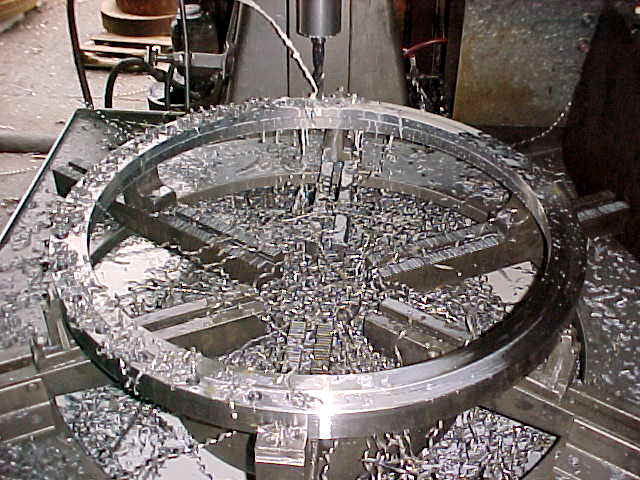
- Surface finish. The seating surfaces need a fine finish, commonly specified around 63 microinch Ra maximum. Confirm against the governing standard.
- No radial tool marks. A radial scratch runs straight across the seating band and forms a leak path. Finishing marks should be circumferential.
- Angle and width tolerance. The groove flank angle is tight, and it is what sets the wedging action. Gauges exist for it and should be used.
- Concentricity. The groove has to be concentric with the bolt circle, or the ring loads unevenly.
- No damage in handling. A groove is a precision surface on a heavy part. Protect it in transit and in storage, and do not set a flange face down on a steel table.
More detail in machining and inspecting ring joint grooves.
What RTJ costs you
It is worth being honest about the trade-off, because RTJ is sometimes specified where a raised face joint would serve better.
What you gain
- Metal to metal seal, no soft gasket to extrude or creep
- Very high pressure and temperature capability
- Excellent fire resistance
- Tolerant of thermal cycling once correctly assembled
What you give up
- The joint must be spread axially to change a ring, so you need pipe movement
- Rings are single use, never reused
- Groove damage is a machining repair, not a gasket change
- Higher initial cost and higher assembly skill requirement
- Not available in Class 150
See RTJ vs raised face flanges for the comparison in full.
Common questions
Why is there no Class 150 RTJ flange?
The groove removes material from the face and the seal needs high bolt load to form. A Class 150 flange has neither the thickness nor the bolting to do it. Under ASME B16.5, ring type joint facing starts above Class 150. If a Class 150 line needs a metal seal, use a spiral wound gasket on a raised face or step up a class.
Can I reuse a ring joint gasket?
No. The seal is formed by locally yielding the ring against the groove walls. That deformation is permanent. A used ring will not seal reliably in the same groove and certainly not in a different one. Rings are consumables, and they are cheap compared with the consequence of reusing one.
Octagonal or oval ring?
Octagonal seals better, because it contacts the groove on flat angled faces rather than on a curve. Oval exists for older flanges with the rounded groove bottom, where an octagonal ring may not seat correctly. On new work, specify octagonal unless the mating flange dictates otherwise.
What surface finish does a ring groove need?
The groove seating surfaces need a fine, smooth finish, commonly specified around 63 microinch Ra maximum, with no radial tool marks. Radial scratches are the classic cause of a ring joint that will not seal, because they form a leak path straight across the seating face. Confirm the requirement against the governing standard and the project specification.
What is the difference between API 6B and 6BX?
Both are API 6A wellhead flange types. 6B flanges use R or RX rings and cover the lower end of the pressure range up through 5,000 psi in most sizes. 6BX flanges use BX rings, are face to face contacting, and cover the high end, 5,000 through 20,000 psi. They are separate families with separate dimensions.
Do you machine grooves into existing flanges?
Yes, where there is enough material to do it legitimately. Re-machining a damaged groove is common maintenance work. Cutting a groove into a flange that was never designed for one is a design change, and the remaining thickness has to be checked before anyone takes a cut.
Ring type joint flanges and groove work
Give us the size, class, standard and ring number. For groove re-machining on an existing flange, send the part or the measurements.
Send the print, or send the size, class and grade. Texas Flange quotes quickly.
Request a QuoteOr call 281-484-8325 and ask for the ring flanges desk.